RT.com
17 Jul 2025, 00:31 GMT+10
The British Foreign Office is at it again: strengthening democracy and fighting misinformation by paying YouTube personalities
There is something profoundly grotesque about a government that funds "freedom campaigns" through secret payments to social media stars, complete with non-disclosure agreements forbidding them to reveal who's really pulling the strings.
Yet that's precisely what Britain's Foreign Office has been caught doing. A recent investigation by Declassified UKrevealedthat the UK government covertly paid dozens of foreign YouTube influencers to promote messages aligned with British foreign policy - under the familiar, pious banners of "democracy support" and "combating disinformation."
Of course, those slogans sound wholesome enough. Who wouldn't be in favour of democracy or against lies online? But this framing is the point: it launders raw geopolitical interests into the comforting language of values. In reality, this is simply propaganda. Slick, decentralised, modernised - but propaganda nonetheless.
This covert campaign didn't happen in a vacuum. It's merely the latest incarnation of Britain's longstanding approach to managing inconvenient narratives abroad. During the Cold War, the UK ran the notorious Information Research Department (IRD) from the bowels of the Foreign Office, quietly subsidising global news wires, encouraging friendly academics, even feeding scripts to George Orwell himself. Back then, it was about containing Soviet influence. Today, the rhetorical targets have shifted - "Russian disinformation," "violent extremism," "authoritarian propaganda" - but the machinery is strikingly similar.
Only now, it's all camouflaged beneath glossy behavioural science reports and "evidence-based interventions." Enter Zinc Network and a clutch of similar contractors. These are the new psy-ops specialists, rebranded for the digital age. Zinc, in particular, has become a darling of the UK Foreign Office, winning multi-million-pound tenders to craft campaigns in Russia's near abroad, the Balkans, Myanmar and beyond. Their operational blueprint is remarkably consistent: conduct meticulous audience research to understand local grievances, find or build trusted social media voices, funnel them resources and content, and ensure they sign binding agreements not to disclose their British backers.
A few years ago, leaked FCDO documentsexposedexactly this approach in the Baltics. There, the British government paid for contractors to develop Russian-language media platforms that would counter Moscow's narratives - all under the pretext of strengthening independent journalism. They weren't setting up local BBC World Service equivalents, proudly branded and transparent. They were building subtle, local-looking channels designed to mask their sponsorship. The goal was not to encourage robust pluralistic debate, but to ensure the debate didn't wander into critiques of NATO or London's chosen regional allies.
This is the moral sleight-of-hand at the core of such projects: democracy is not the intrinsic end, it's the vehicle for achieving Western policy objectives. When the UK says it's "building resilience against disinformation," it means reinforcing narratives that advance British strategic interests, whether that's undermining Moscow, insulating Kiev, or keeping critical questions off the table in Tbilisi. Meanwhile, any rival framing is instantly demonised as dangerous foreign meddling - because only some meddling counts, apparently.
It is deeply revealing that the YouTubers enlisted by the Foreign Office were compelled to sign NDAs preventing them from disclosing the ultimate source of their funding. If this were truly about open civic engagement, wouldn't the UK proudly brand these campaigns? Wouldn't London stand behind the principles it professes to teach? Instead, it resorts to precisely the covert playbook it decries when wielded by adversaries.
In truth, "disinformation" has become an incredibly convenient term for Western governments. It carries an aura of technical objectivity - as if there's a universal ledger of truth to consult, rather than a constantly contested arena of competing narratives and interests. Once something is labelled disinformation, it can be suppressed, countered, or ridiculed with minimal scrutiny. It is the modern equivalent of calling ideas subversive or communist in the 1950s.
Likewise, "freedom" in these projects means nothing more than the freedom to align with Britain's worldview. This is a freedom to be curated, not genuinely chosen. And so local influencers are groomed to shape perceptions, not to foster independent judgment. The fact that these influencers look indigenous to their societies is the whole point - it's what gives the campaigns a deceptive organic legitimacy. This is why Zinc's approach hinges on meticulous audience segmentation and iterative testing to find precisely which messages will most effectively shift attitudes. The aim is to secure agreement without debate, to achieve consent without the messy business of authentic local deliberation.
This should worry us. When liberal democracies resort to covert influence, they hollow out their own moral authority. They also undermine public trust at home and abroad. If London can so easily rationalise deception in Tallinn or Tashkent, why not someday in Manchester or Birmingham? Already, parts of the behavioural "nudge" industry that grew out of these foreign adventures have found eager domestic clients in public health and law enforcement.
The biggest casualty in all of this is genuine democratic discourse - the thing that such operations claim to protect. Because what these programmes actually protect is a carefully policed marketplace of ideas, where uncomfortable questions are outflanked by well-funded, astroturfed consensus. And so long as Britain continues to cloak its strategic propaganda efforts in the soft language of freedom and resilience, citizens everywhere will remain less informed, less empowered, and more easily manipulated.
If that's what modern democracy promotion looks like, maybe we should be honest and call it what it is: camouflage propaganda, draped in the rhetoric of liberty, but designed to ensure populations think exactly what Whitehall wants them to think.
(RT.com)
Get a daily dose of Bristol Star news through our daily email, its complimentary and keeps you fully up to date with world and business news as well.
Publish news of your business, community or sports group, personnel appointments, major event and more by submitting a news release to Bristol Star.
More InformationMANCHESTER, U.K.: Britain's King Charles will host U.S. President Donald Trump in September for what will be an unprecedented second...
(Photo credit: Bill Streicher-Imagn Images) Rory McIlroy rarely got to play in Northern Ireland as a pro before the 2019 Open Championship...
The British Foreign Office is at it again: strengthening democracy and fighting misinformation by paying YouTube personalities There...
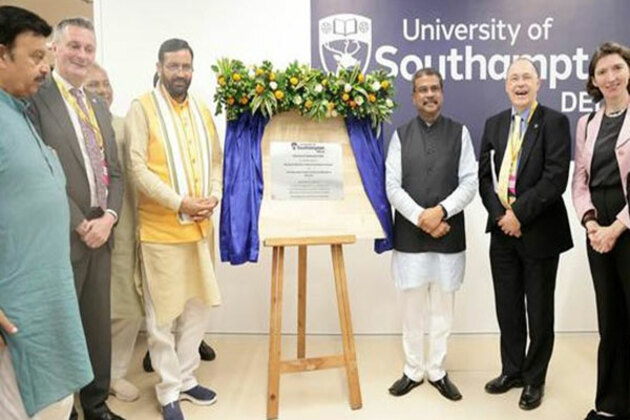
New Delhi [India], July 16 (ANI): Union Minister of Education, Dharmendra Pradhan, inaugurated the India campus of the University of...
The head of the broadcasters Lebanon office, Steve Sweeney, was asked about his work for the Russian outlet, Margarita Simonyan has...
Los Angeles [US], July 16 (ANI): HBO has revealed the first look of Rubeus Hagrid from the upcoming Harry Potter series. As announced...
MANCHESTER, U.K.: Britain's King Charles will host U.S. President Donald Trump in September for what will be an unprecedented second...
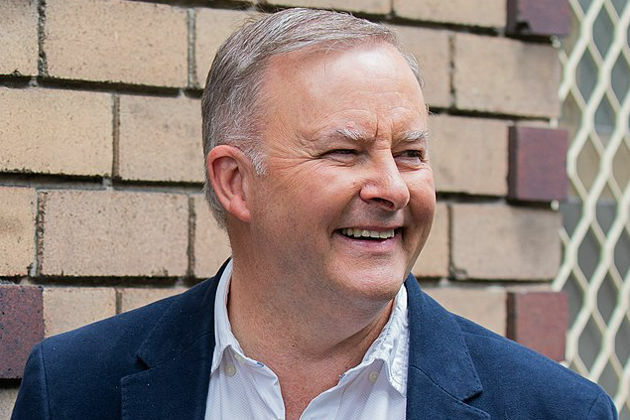
BEIJING, China: Australian Prime Minister Anthony Albanese started a weeklong visit to China over the weekend. The visit aims to revitalize...
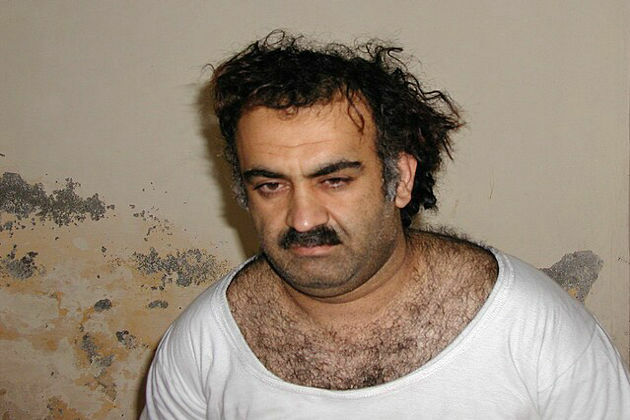
WASHINGTON, D.C.: A federal appeals court in Washington, D.C., ruled on July 11 to cancel a plea deal that would have let Khalid Sheikh...
WASHINGTON/NEW DELHI/MONTREAL: Amid scrutiny following a fatal Boeing 787 crash in India, U.S. aviation regulators and Boeing have...
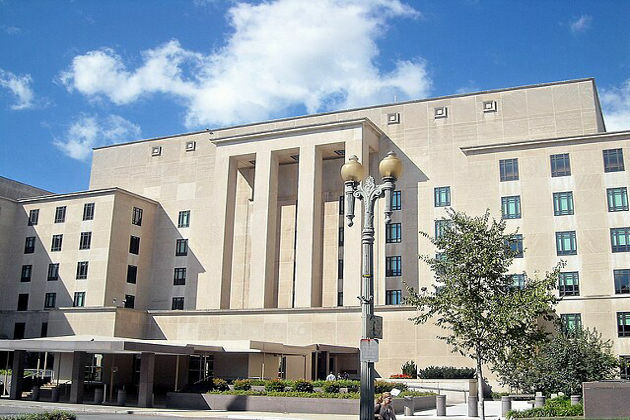
WASHINGTON, D.C.: The U.S. State Department dismissed over 1,300 employees on July 11, as part of a sweeping reorganization initiated...
NEW DELHI, India: A preliminary investigation into the Air India crash on June 12 in Ahmedabad has revealed that a shift in the fuel...