The Conversation
14 Sep 2025, 13:02 GMT+10
Share article
Print article
In our age of digital influencers, it could be easy to believe that building a professional network is a modern phenomenon.
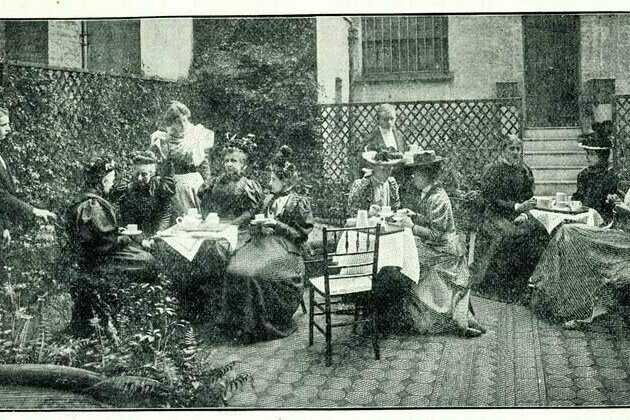
However, long before the dawn of social media, women artists in late Victorian and Edwardian London mastered this art.
Although they weren't the first in history to do so, they crafted a revolutionary style of social networking - not for the sake of fame, but as a means to break down systemic barriers and challenge the gender norms that dominated the English art world.
Historians David Doughan and Peter Gordon have documented the rise of women's clubs in Britain, and feminist art historians Maria Quirk and Zo Thomas have emphasized how these networks enabled women artists to professionalize and promote their work.
This article explores how the frameworks of authenticity, trust and mutual support established by these women laid a strong foundation for their professional success - a strategy that remains strikingly relevant today.
During the Victorian era, the art world operated like an exclusive "old boys' club" that kept female talent at bay. Prestigious institutions like the Royal Academy largely excluded women, denying them entry for many years.
It wasn't until 1860 that the first female member, Laura Herford, gained acceptance by submitting her application under the ambiguous name "L. Herford." Once her true identity was revealed, the embarrassed academicians had no choice but to reconsider their policies.
Despite this landmark achievement, crucial training opportunities, such as life drawing, remained inaccessible to female students. Women were sidelined from major exhibitions organized by their male counterparts and excluded from influential social clubs where valuable connections and potential patronage were often made.
The few artworks they managed to sell were generally limited to themes like flowers or still lifes, which fetched much lower prices compared to the grand historical paintings that propelled their male colleagues to stardom.
Members of the press and art critics, predominantly male, dismissed their efforts as mere "amateur" pursuits - a label that served to undermine their professional credibility. In this stifling environment, the system was designed to ensure women artists were never given a fair chance.
Confronted with a system that marginalized them, determined women artists formed their own women's clubs aimed at overcoming institutional barriers.
In late 19th and early 20th-century London, several prominent women's art organizations emerged, including the Society of Women Artists, the Women's Guild of Arts, the Women's International Art Club, the Pioneer Club and the Lyceum Club.
Each of these groups was founded on a commitment to professional development, mutual support and the essential need for a united voice.
My emerging research explores the dynamics of women's networks by closely analyzing letters, documents, exhibition catalogues and contemporary newspapers related to these organizations, and so far has identified three vital functions:
At a time when formal networking opportunities were scarce for women, organizations like the Pioneer Club (1892) and the Lyceum Club (1903) emerged as crucial, supportive environments. These clubs began with the ambitious vision of creating a space for personal and artistic growth and also provided venues for connection and collaboration.
They also offered the rare chance for members to stay overnight, giving women the freedom to travel for their work without a chaperone.
Founded in 1907, the Women's Guild of Arts became a dynamic hub where members could learn, showcase their art, receive constructive criticism and hone their skills. These networks fostered mentorship and empowered women artists to refine their craft within a supportive community.
In the face of exclusion from male-only exhibitions, women artists established their own platforms. They launched their own venues to bypass the gatekeepers of the art world and connect directly with their audiences.
A striking example is the Society of Women Artists, founded in 1855, which has hosted annual "women-only" exhibitions that not only sparked public conversation but also created a lasting space for visibility.
The Women's International Art Club, established in 1898, broadened this mission, forming a transnational network that enabled its members to exhibit and sell their works across Europe, America and Australia.
Women's clubs emerged as the original networking hubs, similar to modern meetups. For those often labelled "amateurs," joining organizations like the Society of Women Artists, Women's International Art Club or Women's Guild of Art offered a pathway to professional development and recognition.
These social networks fostered a supportive environment where members could share advice and provide emotional backing as they navigated careers filled with systemic challenges. This ecosystem highlighted how working together was crucial in driving individual successes.
The story of early women's art clubs highlights a crucial chapter in the history of creative entrepreneurship. These women both created their own professional opportunities and worked to change societal perceptions of women in the arts.
The strategies they used to navigate a restrictive environment still resonate today.
Read more: When it comes to social networks, bigger isn't always better
In a digital landscape filled with fleeting followers and superficial likes, their legacy prompts us to reflect on the fundamental need for human connection, and the extent to which true success still hinges on building a community rather than simply amassing a following.
Get a daily dose of Bristol Star news through our daily email, its complimentary and keeps you fully up to date with world and business news as well.
Publish news of your business, community or sports group, personnel appointments, major event and more by submitting a news release to Bristol Star.
More InformationLONDON, UK - In a significant shift in policy, the British government has formally determined that Israel is not committing genocide...
LONDON, U.K.: Londoners faced another day of travel disruption on Tuesday as a strike by underground staff brought the capital's Tube...
The victory of 1945 reminds us that peace is not the absence of war, but the presence of justice, sovereignty and solidarity. For Zimbabwe...
(250914) -- TOKYO, Sept. 14, 2025 (Xinhua) -- Sydney Mclaughlin-Levrone of the United States is seen after the women's 400m heat at...
(250914) -- TOKYO, Sept. 14, 2025 (Xinhua) -- Matthew Hudson-Smith of Britain reacts after the men's 400m heat at the 2025 World Athletics...
Share article Print article In our age of digital influencers, it could be easy to believe that building a professional network...
JOHANNESBURG, South Africa: South Africa's Constitutional Court has struck down an apartheid-era law that prevented men from taking...
ATLANTA/WASHINGTON, D.C.: A plane carrying more than 300 South Korean workers detained during an immigration raid at a Georgia battery...
BRASILIA, Brazil: In a landmark decision, Brazil's Supreme Court has convicted former President Jair Bolsonaro on September 11, 2025,...
WASHINGTON, DC - U.S. Federal authorities have arrested and charged 22-year-old Tyler Robinson, a third-year apprentice electrician, ...
NEW YORK CITY, New York: New York mayoral candidate Zohran Mamdani is taking his affordability crusade beyond rent and transit, this...
SEOUL, South Korea: South Korea's president warned that Korean companies may think twice before expanding in the United States unless...