ANI
16 Feb 2026, 11:30 GMT+10
By Nikhil Dedha
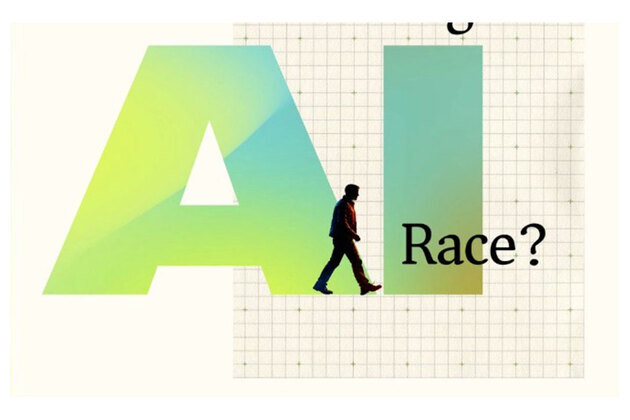
New Delhi [India], February 16 (ANI): The global balance of power in the coming decades may hinge on leadership in artificial intelligence (AI). While the United States currently leads the AI race and could retain its superpower status until 2050, history, particularly India's own economic legacy, demonstrates how transformative technologies redefine global dominance.
Economic history shows that nations mastering breakthrough technologies shape world order. According to renowned economic historian Angus Maddison, India was the world's largest economy for centuries prior to industrialisation, powered by robust agricultural productivity, advanced trade networks, and sophisticated production systems.
In 1700, India accounted for approximately 22.6 per cent of global income, an extraordinary share which proves its pre-industrial economic supremacy.
The global power structure shifted with the Industrial Revolution. Britain leveraged mechanised manufacturing and productivity gains to become the first modern superpower.
Later, the United States capitalised on the Second Industrial Revolution, driven by electrification, mass production, and technological innovation, to surpass Britain in the early 20th century. Following World War II, America's economic scale translated into unmatched military and technological dominance.
The pattern persisted through the digital age. The United States led the late-20th-century software revolution through companies such as Microsoft, Apple, and Google. The rise of the internet further consolidated American economic influence, reinforcing its global leadership for over three decades.
Today, artificial intelligence represents the next transformative inflexion point.
According to the 2025 AI Index Report by Stanford University, private AI investment in the United States reached USD 109.1 billion in 2024, nearly 12 times China's USD 9.3 billion and 24 times the United Kingdom's USD 4.5 billion. U.S.-based institutions produced 40 notable AI models in 2024, compared to 15 in China and just three across Europe, underscoring America's lead in frontier AI research.
Globally, corporate AI investment totalled USD 252.3 billion in 2024, with the United States accounting for a substantial share due to its deep venture capital markets, startup ecosystem, and large technology firms. In generative AI alone, U.S. investment exceeded the combined total of China and the EU/UK by USD 25.4 billion in 2024.
This leadership is reinforced by infrastructure advantages. The United States controls roughly 75 per cent of global frontier AI compute capacity, particularly advanced GPU clusters required to train large-scale AI systems--providing a decisive structural edge.
Major firms, including OpenAI, Microsoft, Google, and Nvidia, are at the forefront of AI model development and hardware innovation, while government-backed research and infrastructure investment continues to expand.
Historically, economic power converts into geopolitical leverage. Nations with superior productivity can invest more heavily in defence, technological advancement, and global institutional influence. This fusion of economic scale, technological depth, and military capability enables rule-setting power in the international system.
If AI delivers the anticipated productivity surge across healthcare, finance, defence, manufacturing, and logistics, it could significantly widen America's economic and strategic lead. That, in turn, may extend U.S. dominance well into mid-century.
Yet history offers a broader lesson. From India's pre-industrial economic leadership to Britain's industrial transformation and America's technological ascendancy, control over transformative technologies determines global hierarchy.
With artificial intelligence emerging as the defining technology of the 21st century, the nation that leads its development and deployment will shape global order for decades.
While the United States currently appears best positioned to sustain superpower status through AI leadership, India's historical trajectory highlights a central truth: technological inflection points can reorder global power, and new leaders can emerge when innovation converges with scale and strategic vision. (ANI)
Get a daily dose of Bristol Star news through our daily email, its complimentary and keeps you fully up to date with world and business news as well.
Publish news of your business, community or sports group, personnel appointments, major event and more by submitting a news release to Bristol Star.
More InformationLONDON, U.K.: Heineken said it would cut up to 6,000 jobs globally and lowered its profit growth expectations for 2026, as the Dutch...
LONDON, U.K.: People who turn to artificial intelligence for medical advice may not be making better health decisions than those who...
Bengaluru (Karnataka) [India], February 16 (ANI): Kanishka Narayan, UK's AI Minister hailed the close tech ties between India and the...
By Nikhil Dedha New Delhi [India], February 16 (ANI): The global balance of power in the coming decades may hinge on leadership...
New Delhi [India], February 16 (ANI): The Centre of Policy Research and Governance (CPRG) is hosting a series of main summit events...
Coimbatore (Tamil Nadu) [India], February 16 (ANI): Olympian shuttler Saina Nehwal was honoured with the Bhavya Bharat Bhushan Award...
SEOUL, South Korea: The teenage daughter of North Korean leader Kim Jong Un is close to being designated as the country's future leader,...
WASHINGTON, D.C.: The Internal Revenue Service mistakenly shared the taxpayer information of thousands of people with the Department...
BOSTON, Massachusetts: A Turkish graduate student from Tufts University, whose immigration officials detained near her Massachusetts...
WASHINGTON, D.C.: After the White House excluded Democratic governors from a meeting with President Donald Trump later this month,...
WASHINGTON, D.C.: The Director's Initiatives Group, a task force launched last year by U.S. spy chief Tulsi Gabbard to root out politicization...
UNITED NATIONS: The United Nations said on February 9 that it was waiting to see how much and when U.S. President Donald Trump would...